
Festival Crew Planning: Getting the Build and Breakdown Right
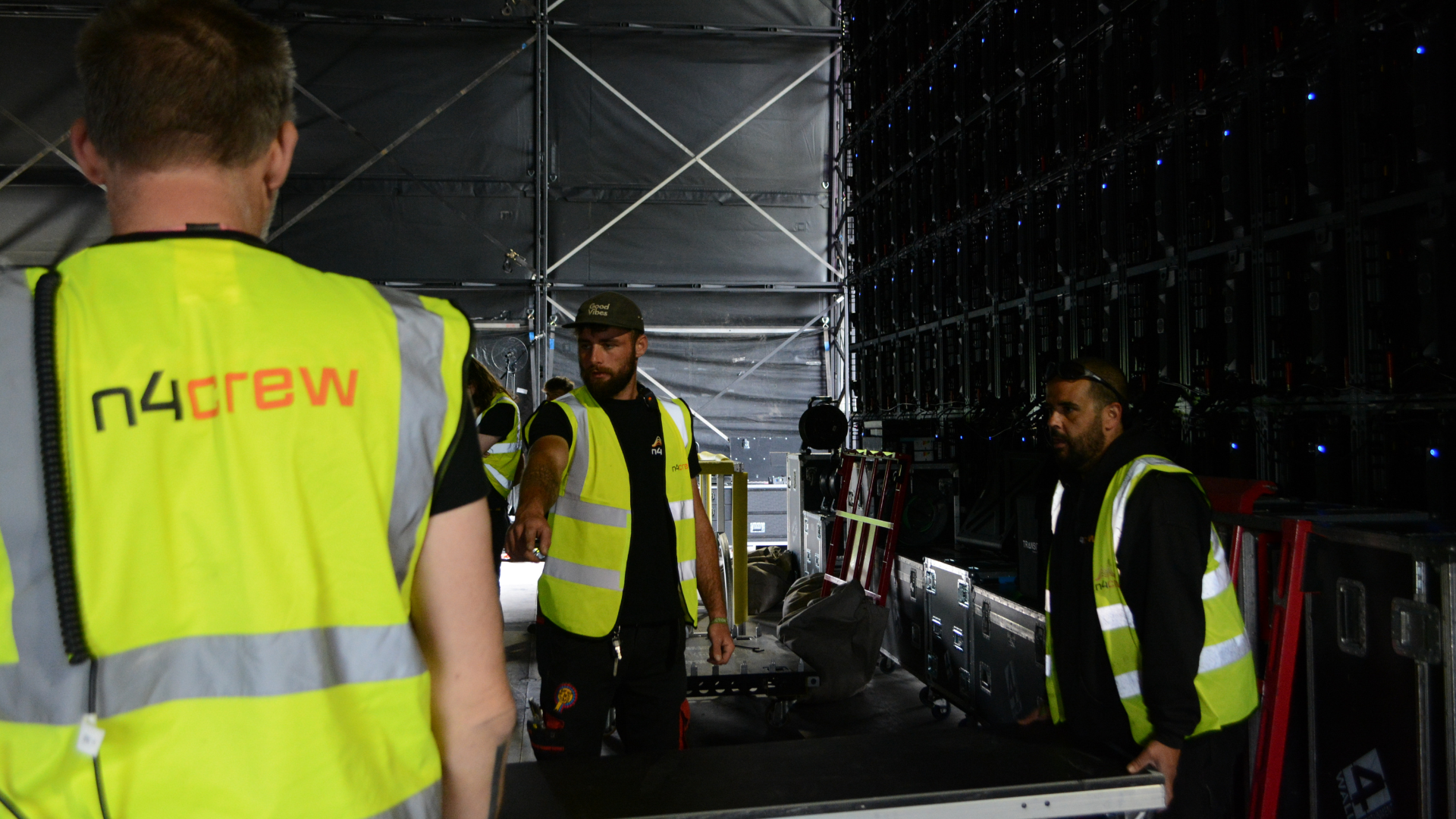
Ask most people what makes a festival build run well, and they'll tell you it's about having enough crew on site. But honestly, that's the smallest part of it.
We've built and broken down enough festivals over the years to know that the number on the booking form is the easy bit. What really sets a build up to run well is everything we put in place before anyone even arrives on site.
It Starts Before the First Van Arrives
We always try to have a proper conversation with a client before we talk numbers.
Not "how many crew do you need," but how the site is actually going to come together. Which contractors land first. Whether there's a point in the build where three trades all want the same bit of ground at once. Whether the load-in is going to be a steady trickle over a week or a busy couple of days before everything else starts stacking up behind it.
None of that shows up on a crew schedule, but it tells us far more than a headcount ever could. It's the difference between sending twelve general crew to fill shifts, and sending the right eight people who know exactly when to be doing groundworks and when to switch over and start supporting the production team.
Plans Change. We're Built for That
Anyone who's worked a festival build knows the programme on paper and the programme on the ground rarely match past day two.
A delivery turns up a day early. A production manager decides the fencing needs to move twenty metres because the sightlines are better. That's just what festivals are like, and it's exactly why we build flexibility into everything we do from the start.
We'd always rather plan for that flexibility than pretend a schedule will hold perfectly still for two weeks. In practice, that means having crew on site who've handled a build changing shape before, who keep things moving calmly, and who know how to adapt without needing to be told what to do next.
The Crew Matter More Than the Roster
We've always believed a crewing company is only as good as the people it sends to site, which is why we've never wanted to become a business where crew are just names on a database.
Some of our crew are brilliant on big outdoor builds. They love the pace, the changing ground conditions, the fact that no two days look the same. Others are at their best working tight alongside a production team on more technical tasks, where the focus is precision and communication as much as physical graft.
Knowing which is which, for every person on our books, is the real job. It's what lets a crew turn up on day one already knowing how to slot into a build, adding value from the first hour rather than the second day.
We Give the Last Day Just as Much Thought as the First
Everyone plans hard for opening day, and rightly so. It's the milestone everyone's working towards.
We think the last few days deserve exactly the same care. Once the audience has gone home, the site has to come apart just as carefully as it went up, usually against a tighter handback deadline than the build itself had.
That's why we think about breakdown from the very start, alongside the build, not as an afterthought once the festival's underway. It doesn't mean writing a second detailed programme months in advance. It means knowing roughly how the wind-down will work, which crew will still be needed once the gates close, and keeping the same level of organisation going right through to the last wagon leaving site.
A festival isn't finished when the headline act walks off. It's finished when the field's been handed back clean and everyone can go home knowing the job's been done properly.
Why This Keeps Coming Back to Relationships
The thing that really makes all of this work is familiarity.
Production managers we've worked with for several seasons already know how we operate, and we know how they like things run, so the pre-build conversation gets straight to what's actually different this year. Crew who've worked the same sites before know the ground and know the client, which means they're contributing from the moment they arrive.
That's really the point of good festival crew planning. It's understanding how a specific event is going to unfold, sending the right people at the right point in the build, and staying close enough to the conversation that whenever something changes, and something always does, the crew on site can adapt without missing a beat.
When we get that right, nobody on site is thinking about us at all. We're just another part of the team getting the festival built, which is exactly how we like it.