
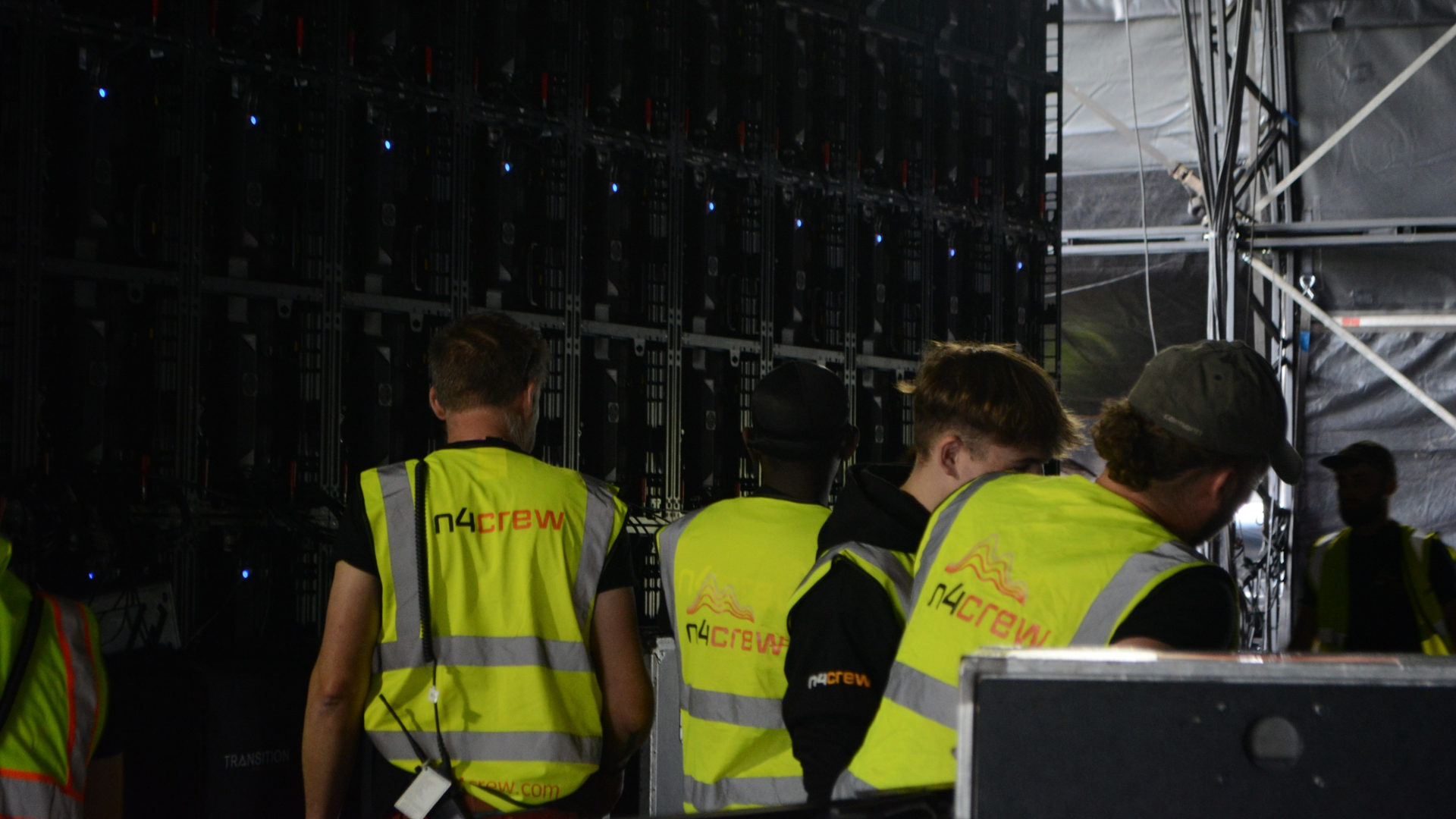
"Can you send some crew over" is one of the most common requests we get, and it's also one of the hardest to act on without a follow-up question or two.
Crew isn't really one thing. General crew and specialist crew do very different jobs, and getting that match right at the start of a build makes a genuine difference to how smoothly the day goes. Here's how we think about the difference, and how we help clients work out which one they actually need.
What General Event Crew Covers
General crew are the backbone of pretty much every event we work on. They're capable, adaptable, and used to turning their hand to whatever the day requires.
That covers things like site setup and breakdown, moving furniture and equipment, helping with deliveries, assisting other trades, and generally keeping a build moving. On the event day itself, general crew often help with front of house tasks, queue management, or supporting the wider operation wherever an extra pair of hands is useful.
The strength of a good general crew member is versatility. They're not tied to one task, and they're comfortable picking up whatever's needed as the day develops. For a huge amount of event work, that's exactly what's required, and it's why general crew make up the majority of most bookings.
What Specialist Crew Covers
Specialist crew bring a particular skill to the job, usually one that takes training, certification, or a good amount of experience to do well.
That includes plant operators for moving heavy loads or working with machinery, stage crew for rigging and technical builds, production crew who work closely with lighting and sound teams, and crew with specific qualifications like forklift or telehandler tickets. It can also mean crew experienced in a particular type of event, such as large-scale festival builds or complex exhibition fit-outs, where the pace and demands are different to a standard corporate event.
The value of specialist crew is that they can be trusted with tasks that carry more risk, more technical complexity, or more consequence if they go wrong. That's not something general crew are expected to cover, and it's not something they should be asked to.
How to Work Out Which You Need
The honest answer is that most events need a mix of both, and the ratio depends entirely on what's actually happening on site.
A straightforward conference or exhibition stand might need almost entirely general crew, with perhaps one or two specialists for a specific technical task. A large outdoor festival build, on the other hand, often needs a strong core of specialist crew for the infrastructure phase, plant operators and stage crew in particular, before general crew take over for the bulk of the setup and event-day support.
A good way to think about it is to look at the tasks on your build programme and ask which ones carry a genuine skill or safety requirement, and which ones are about having capable, reliable people to keep things moving. That split usually gives a clear picture of where specialist crew are actually needed, and where general crew will do the job just as well, often at better value.
Why We'd Rather Have the Conversation Than Just Take the Order
We could simply supply whatever a client asks for, but we think that misses the point of what a good crewing partner should do.
When a request comes in, we like to understand what's actually happening on site before confirming numbers. That means asking about the build, the site conditions, and what each phase of the day actually involves. More often than not, that conversation either confirms the client had it exactly right, or it highlights a spot where a specialist would make life easier, or where general crew would do the job perfectly well without the added cost of a specialist skill nobody actually needs.
We'd always rather have that conversation upfront. It means the crew arriving on site are genuinely suited to the tasks in front of them, and it means clients aren't paying for expertise they don't need or under-resourcing a task that really does require it.
A Few Typical Examples
It's usually easier to picture this with examples of the sort of events we work on regularly, rather than general rules.
A corporate conference at a hotel venue, for instance, is almost always a general crew job. Registration support, moving furniture between sessions, helping with signage and branding, and being on hand for whatever comes up during the day. Nothing there requires a specific ticket or technical qualification, just capable people who know how to keep an event running smoothly.
A festival build looks completely different. Early in the programme, when heavy infrastructure is going in, plant operators and experienced stage crew are doing the bulk of the work, often before general crew are needed on site at all. As the build progresses and the site starts to take shape, general crew become the priority, supporting the wider team with the sheer volume of tasks that come with getting a festival ready to open.
An exhibition fit-out often sits somewhere in between. Stand builders and specialist trades handle the technical elements, while general crew support with logistics, deliveries, and getting stands ready ahead of doors opening. Getting the timing of each right, so specialist crew are there exactly when needed and general crew pick up the rest, is often what separates a calm build from a stressful one.
Getting the Mix Right Pays Off
When the mix of general and specialist crew is right, it tends to show in how smoothly the day runs. Specialist tasks get handled by people who know exactly what they're doing, and everything else moves at pace because there are enough capable, adaptable people to keep it going.
That's really the aim of any good crewing plan. Not the biggest team, and not necessarily the most specialists. Just the right combination of people for the event in front of you.
If you're not sure which mix your event needs, that's exactly the conversation we enjoy having. Tell us what's happening on site and we'll help you work out where specialist skills genuinely add value, and where a great general crew will get the job done just as well.
Frequently Asked Questions
What's the difference between general and specialist event crew?
General event crew are adaptable and handle a wide range of tasks such as setup, breakdown, site support, and event-day assistance. Specialist crew hold specific skills, tickets, or experience for higher-risk or more technical tasks, such as plant operation, rigging, or stage and production work.
Do I need specialist crew for a small event?
Not usually. Most small to medium events, such as conferences, exhibitions, or corporate functions, are well served by general crew alone, unless there's a specific technical or heavy-lifting element involved.
Can specialist crew also do general crew tasks?
Often, yes, but it's not the best use of their time or your budget. Specialist crew are typically booked for the skill they bring, so it usually makes more sense to bring in general crew for the wider support tasks around them.
How do I know if my event needs plant operators or stage crew?
If your build involves moving heavy loads, operating machinery, or technical rigging and staging, that's a strong sign specialist crew are needed. If in doubt, describing your build to a crewing partner is usually enough for them to tell you where the specialist requirements are.
Is it cheaper to book only general crew?
General crew typically cost less than specialist crew, but the aim shouldn't be to minimise cost by avoiding specialists altogether. The better approach is matching the right crew type to each task, which usually gives the best value overall rather than the lowest one.